Showing posts with label Oral Cultures. Show all posts

Monday, December 9, 2024

Tim en la ciudad: Una historia de dos pueblos

Hola, amigos:

           Es maravilloso poder escribirte de nuevo. En nuestra última comunicación, compartí sobre mi viaje al pueblo de Tim. Desde entonces, hemos podido hacer arreglos para que Tim experimente la vida en nuestra ciudad. Esta ha sido una oportunidad para mí de ver mi pueblo a través de los ojos de Tim. Hemos tenido momentos de gran aprendizaje. Muchos cuentos serán compartiendo estos puntos con ustedes. Para esta semana, me centraré en una experiencia que sucedió al comienzo de nuestro recorrido.

            Tuve tiempo de preparar un itinerario para nuestro recorrido por la ciudad. Estuvimos más tiempo del esperado en la mayoría de las actividades. Siempre íbamos tarde.

            Nuestra visita al museo fue increíble. Pasamos tanto tiempo hablando con el guía del museo que ni siquiera llegamos a la biblioteca antes de que cerrara. Mis niveles de estrés se dispararon con cada segundo que pasaba de la hora programada. Sorprendentemente, Tim no parecía demasiado molesto por este problema “menor”. Tim parecía disfrutar más de cada una de las experiencias cuanto más tiempo pasamos en cada actividad.

            Recuerdo las palabras de Tim al final de la gira. El preguntó: “¿Por qué sigues persiguiendo la hora?” Y continuó: “Te cansaras antes de que marque la hora. La experiencia vale la pena y el tiempo invertido”. Las palabras de Tim han permanecido en mi mente desde su visita. No había pensado en el tiempo y los eventos de esa manera antes.

            Hasta que volvamos a leer,

            Songz.

Tuesday, December 3, 2024

Historia de dos pueblos: ¡Muéstranos!

Hola, amigos:

            Volví a visitar el pueblo de Tim. Tuve la oportunidad de observar cómo aprenden los niños.

            Los niños no paran de jugar. Pero me di cuenta de que se les permite jugar con cualquier cosa y con todo. Desde palos y piedras hasta electrodomésticos viejos, casi nada está fuera de los límites. Utilizan el mundo que les rodea para jugar. El autodescubrimiento es parte del proceso de aprendizaje. Es ahí en donde adquieren habilidades y conocimientos a medida que juegan con adultos y otros niños. Sin embargo, desearía que tuvieran más juguetes apropiados para su edad.

            Los más jóvenes se reúnen bajo los árboles en los días soleados y en el interior los días de lluvia. Se mantienen calientes gracias al fuego de las historias. Cuando se cuentan las historias, a cada niño se le da la oportunidad de volver a contar una historia. Este ejercicio les ayuda a ser parte de la historia. Además, esta práctica les ayuda a retener la información. Me di cuenta de que los niños tienen su propia canción sobre la historia. Lo cantan mientras juegan, hacen las tareas escolares, incluso cuando están haciendo sus quehaceres. Una de las historias que a los ancianos les encanta contar es la historia de los primeros pobladores del pueblo. Me sorprendió cómo los niños pudieron volver a contar esta historia. Había memorizado todos los hechos que ocurren en la historia.

            Hay un dicho que los niños repiten a menudo: “Si quieres que te escuchemos, muéstranoslo. ¡No nos lo digas!”. Incluso tienen una melodía pegadiza para ello. Prefieren la información en imágenes o videos. Esto es extraño para mí. Pienso en palabras y frases. Mis imágenes están hechas de palabras y mis videos son oraciones.

            Tuve que probar este extraño dicho. Vi a una niña montando en bicicleta a casa, así que le pregunté quién le enseñó a andar en bicicleta. Parecía confundida por la pregunta. Con el tiempo, me dijo que aprendió observando a otros a montar bicicleta. Esto era extraño para mí. En nuestro pueblo, los niños son enseñados por sus padres o hermanos a andar en bicicleta. Un niño es entrenado hasta que es capaz de montar sin ayuda. No es algo que exploren por su cuenta.

            La repetición es importante en esta comunidad. Se vuelven a contar historias, se recrean eventos y se cantan canciones. Incrustada en las historias, dramas y canciones hay verdades y lecciones que les ayudan a dar sentido a la vida. Hay una canción que cantan los niños que tiene como objetivo enseñarles sobre los peligros del fuego.        


          La casa está ardiendo en fuego (X2)

          Mira allí (X2)

          Fuego, fuego (X2)

          Verter agua (X2)


La canción es breve y pegadiza. Es un simulacro de incendio mental para los niños. Las palabras les ayudan a saber qué hacer en caso de incendio.

Pensé que nuestra habilidad para leer y escribir nos ponía en ventaja. Los entendí mal debido a nuestras diferencias. Hay tanto que todavía tenemos que aprender los unos de los otros. Con suerte, Tim y yo nos volveremos a encontrar.

Hasta que nos volvamos a leer,

Songz

Wednesday, November 27, 2024

Historia de dos pueblos: Bibliotecas Vivientes

Hola, amigos:

            Ha pasado algún tiempo desde la última vez que escribí. Mi amigo me llevó a dar un recorrido por su pueblo natal. Es importante que para proteger su identidad lo llamaremos Tim. Me han presentado como un amigo de Tim, de una tierra muy lejana. No podemos dejar que la gente del pueblo sepa que soy del otro lado del río. Es nuestro pequeño secreto.

Se siente como si hubiera estado aquí durante muchos años, aunque solo haya sido una semana. Es como si conociera a las personas desde hace mucho tiempo.

La ciudad está viva y muy ocupada. Tim parece conocer a todo el mundo y es conocido por todo el mundo. La gente es amable y me han dado la bienvenida a su comunidad. Incluso me dieron nombre: Vitsher z oo, Tim me dice que significa contracción nerviosa. Suena mejor en su idioma. Me dieron el nombre porque dijeron que mi sonrisa se ve nerviosa cuando saludo. Si esto es un poco confuso, déjame explicarte. De dónde provengo, nuestros saludos rara vez duran más de un minuto y, a menudo, van acompañados de una sonrisa de cortesía. Simplemente decimos: “Hola, ¿cómo estás?” y la respuesta a esta pregunta es: “Estoy bien, gracias”.

Pero no es así como lo hacen. Un saludo es una conversación en sí misma. Sus saludos son más personales. Tim explicó que un saludo estaba incompleto sin una actualización sobre la salud y la vida familiar de la persona. Recuerde que se dijo: “¡Las personas de este pueblo parecen decir mucho más!”. Dicen que soy raro porque no digo mucho, pero sonrío mucho.

Pasamos un rato con los ancianos del pueblo. Pasan las tardes contando historias sobre la ciudad. No pude evitar imaginar lo enorme que debería ser su biblioteca y los libros con toda la información. En mi ciudad natal, tendrías que pasar mucho tiempo en la biblioteca leyendo libros antes de hablar a las personas con autoridad. Los autores de su bibliografía determinaban su autoridad sobre un tema.

Tim se rió entre dientes con una sonrisa en su rostro y me dijo que habían memorizado toda la información. Lo interrumpí y le dije: “Pero tiene que haber un equipo que escriba sus palabras para las generaciones futuras. ¡De lo contrario, se perderá para siempre!”.

Desconcentrado, Tim explicó que no era necesario porque eran parte de una larga tradición. Esta era una tradición de preservar su historia de una generación a la siguiente.

Mi amigo Tim me ayudó a ver que tenían bibliotecas vivientes. La gente caminaba y respiraba enciclopedias. La suya era una tradición oral y que dieron vida a sus historias y canciones.

Me estoy preparando para mi próxima visita. Tendré la oportunidad de ver cómo aprenden los niños. Eso es todo por ahora.


Hasta que volvamos a leer, Songz.

Friday, September 20, 2024


Una historia de dos pueblos

Querido lector,

Probablemente estás leyendo esto porque obtienes información a través de las palabras escritas o puede que hayas hecho un “click” en el enlace equivocado. ¿De cualquier manera, me pregunto si en algún momento has pensado en cómo piensas? ¿Cómo procesas la información? A lo mejor seas como yo y prefieres leer o eres de los que aprende escuchando.

Me gustaría contarles una historia sobre dos pueblos cercanos que están separados por un río. Uno de los pueblos, fue fundado sobre un documento escrito. Un mundo de la palabra escrita. Aquí es donde vivo. En mi pueblo lo vemos como un mundo de orden y de estructura. Construimos nuestra comunidad con nuestros teclados o con un lápiz y papel. Bajo una ley: La palabra escrita dura más. El otro pueblo que está fundado sobre la palabra. Un mundo que parece caótico y desordenado. Esta comunidad se construye viviendo la vida y con la palabra hablada. Bajo una sola ley: Recuerda que fue dicho.

Soy ciudadano de la palabra escrita. Muchas veces he pensado que tenemos la forma correcta de aprender. Pero no es tan simple. Siempre que estoy junto al río, me sorprende la facilidad con la que las personas del pueblo cercano recuerdan los discursos, canciones y las acciones de sus héroes. Lo hacen sin tener que leer la información de algunas páginas. Me parece algo extraño. Lo admito, siento más envidia que asombro. Porque a mí también me encantaría poder recordar cada palabra pronunciada por un orador, la letra de una canción y los pasos de baile de una canción con solo escucharla y verla.

Nuestros padres fundadores nos advirtieron sobre los peligros de mezclarnos con las personas de otros pueblos. Pero me he estado reuniendo en secreto con una persona del pueblo vecino. Estamos aprendiendo sobre nuestras culturas. Planeo visitar su pueblo pronto. Deseo experimentar la vida en su mundo. Si nuestro plan tiene éxito, escribiré sobre lo que he aprendido.

Hasta que volvamos a leer, 

Songz.

Wednesday, July 12, 2023

START TIME

You’ve planned a program. You want to start on time. What does that mean?

Is the start time a time on the clock? Is it when people are ready to come?  When their friends also show up? When the program has started?

In many places where relationships and community are more important than calendars and clocks , the real time to start is when the community, when the people involved, have gathered. What triggered them to gather? Usually not a set time on the clock.

For instance, we know of situations where people gathered when they saw a light on in the meeting building; when the leader’s car stood in front of the building; when the boring part of the program was over; when they themselves were finished with other things.

What we, as clock and calendar people, have learned from this is:

  • start with something fun
  • give a signal people can see (light is on; car is in front of the building, flag hangs out in front again . . .)
  • give a signal people can hear (ring a bell, set up a sort relay race through the community with a horn or other noise-maker, everyone who is already gathered shouts as hard as they can . . .)
  • physically gather the people yourself (make a chain of people; give everyone in the chain a hat)
  • give a reward to everyone who was there the whole time.
  • learn the local rhythm of life and choose a time when people are likely or able to come.                                                                                                               

And the last but most important tip:  relax and repeat. Repeat the core content of the program several times and in several different ways, perhaps with a game or an activity. In this way, if one chance to share an important point is missed, you know that other chances are still coming up. 


Photo: Grzegorz W. Tężycki, CC BY-SA 4.0 <https://creativecommons.org/licenses/by-sa/4.0>, via Wikimedia Commons

Wednesday, July 6, 2022

Oral Preference Learners & Print Preference Learners: A Handy Comparison

 This handout in Romanian and English is from a workshop given at the Rroma Workers Network Conference in Romania this past May. 


Tuesday, November 30, 2021

Tim's in Town: A Tale of Two Towns

Hello friends,

It is wonderful to be able to write to you again. On our last communication, I shared about my trip to Tim’s town. Since then, we’ve been able to arrange for Tim to experience life in our town. This has been an opportunity for me to see my town through Tim’s eyes. We have had moments of great learning. Much ink will be spilt sharing these points with you. For this week, I will focus on an experience which happened at the beginning of our tour.

I had time to prepare an itinerary for our tour of the town. I was determined to make the most of each day. To my surprise and frustration, we hardly kept true to the schedule. We stayed longer than expected in most of the activities. We were always running late.

Our visit to the museum was amazing. We spent so much time speaking with the museum guide that we never even got to the library before it closed. My stress levels shot up with every second we went beyond the scheduled time. Amazingly, Tim did not seem too bothered by this “minor” issue. Tim seemed to enjoy the experiences more the longer we spent in each activity.

I remember Tim’s words at the end of the tour. He asked, “Why do you keep on chasing the clock?” He continued, “You will tire yourself before the clock strikes. The experience is worth the time spent.” Tim’s words have lingered in my mind since his visit. I had not thought about time and events that way before.

Until we read again,

Songz

Tuesday, September 7, 2021

Povestea celor două orașe: Arată-ne!

 Bună prieteni,

 Am vizitat din nou orașul lui Tim. Am avut oportunitatea să observ cum învață copiii.

 Copiii nu încetează să se joace. Dar am observant că li se permite să se joace cu orice, cu toate lucrurile. De la bețe și pietre la aparate vechi, aproape nimic nu le este interzis. Ei folosesc tot ce îi înconjoară pentru joacă. Iar descoperirea de sine face parte din procesul de învățare. Ei dobândesc abilități și cunoștințe pe măsură ce se joacă cu adulții și cu ceilalți copii. Totuși, m-aș bucura să văd că au parte de jucării adecvate vârstei lor.

Cei tineri se întâlnesc la umbra copacilor în zilele însorite sau înăuntru când plouă. Focul poveștilor pline de suspans le încălzește inimile. Când se spune o poveste, fiecărui copil i se dă ocazia să respună povestea. Cu acest exercițiu ei devin parte din poveste. De asemenea, acest lucru îi ajută să rețină informația. Am observant un lucru: copiii își compun propria melodie pentru fiecare poveste. Ei o cântă în timp ce se joacă, în timp ce învață, sau chiar în timp ce își îndeplinesc atribuțiile casnice. Una dintre poveștile preferate ale celor în vârstă e despre cei care au întemeiat orașul. Am fost surprins să văd cum copiii au putut și ei, cu multă ușurință, să spună această poveste. Ei au inmagazinat în memorie toate întâmplările.

Există o zicală pe care copiii o repetă des: “Dacă vrei să te ascultăm, arată-ne. Nu ne spune doar!”. Ei chiar au și o melodie ritmată pentru această zicală. Ei preferă să primească informația în imagini sau video. Acest lucru mie mi se pare ciudat. Eu gândesc în cuvinte și propoziții. Imaginile mele sunt alcătuite din cuvinte și videourile mele sunt propoziții. Așa că am vrut să testez această zicală ciudată. Am văzut o fetiță venind spre casă pe bicicletă, așa că am întrebat-o cine a învățat-o să meargă pe bicicletă. Ea părea că nu înțelege întrebarea. Până la urmă, mi-a spus că a învățat când i-a văzut pe alții mergând pe bicicletă. Acest lucru mi s-a părut ciudat. La noi în oraș, copiii sunt învățați de către părinții lor sau de către frații mai mari. Un copil este asistat și susținut până când este capabil să meargă singur. Mersul pe bicicletă nu e ceva ce ei să învețe de unii singuri.


Repetiția e importantă în această comunitate. Poveștile sunt spuse din nou și din nou, evenimentele sunt reluate și cântecele sunt cântate iar și iar.  Teatrul și muzica sunt incorporate în povești și reprezintă adevăruri și lecții care îi ajută să dea sens vieții. Există un cântecel pe care îl cântă copiii și care îi învață despre pericolul de a se juca cu focul.

Casa arde (X2)

Privește acolo (X2)

Foc, foc (X2)

Toarnă apă (X2)

Acesta este un cântecel scurt, dar vioi. Este ca un exercitiu mental pentru copii, cuvintele îi ajută să știe ce să facă în cazul izbucnirii unui incendiu.

 Am crezut că abilitățile noastre de a citi și de a scrie ne avantajează. Dar am înțeles greșit acest lucru, din cauza diferențelor dintre noi. Sunt atât de multe lucruri pe care trebuie încă să le învățăm unii de la alții. Sper că mă voi întâlni din nou cu Tim.

Iar noi, ne vom întâlni în următoarea scrisoare.

Songz


Friday, August 20, 2021

A Tale of Two Towns: Show Us!

 Hello friends,

 I visited Tim’s town again. I had the opportunity to observe how the children learn.

The children don't stop playing. But, I noticed that they are allowed to play with anything and everything. From sticks and stones to old appliances, almost nothing is out of bounds. They use the world around them to play. Self-discovery is part of the learning process. They pick up skills and knowledge as they play with adults and other children. I wish they had more age appropriate toys, though.

The young ones gather under the trees on sunny days & indoors when it rains. They are kept warm by the fires of the engaging stories. When the stories are told, each child is given an opportunity to retell a story. This exercise helps them to be part of the story. Also, this practice helps them retain information. I noticed the kids have their own song about their history. They sing it while playing, doing school work, even when they are doing their chores. One of the stories the elders love to tell is the story of the first settlers of the town. I was surprised how the children were able to retell that story. They had committed all the facts to memory.

There is a saying the children often repeat: “If you want us to listen, show us. Don't tell us!” They even have a catchy tune for it. They prefer information in pictures or videos. This is strange for me. I think in words and sentences. My pictures are made up of words, and my videos are sentences. 

I had to test this strange saying. I saw one child riding a bike home, so I asked her who taught her to ride the bike. She seemed confused by the question. Eventually, she told me she learned by watching others ride. This was strange for me. In our town, children are taught by their parents or siblings to ride bikes. A child is coached until she is capable of riding without assistance. It is not something they explore on their own.


Repetition is important in this community. Stories are retold, events are re-enacted, and songs are sung. Embedded in the stories, dramas and songs are truths and lessons which help them make sense of life. There’s a song children sing which is meant to teach them about the dangers of fire.

                         The house is burning (X2)

                         Look there (X2)

                        Fire, fire (X2)

                        Pour water (X2)

The song is brief and catchy. It is a mental fire drill for the children. The words help them know what to do in case of a fire.

I thought our ability to read and write put us on an advantage. I misunderstood them because of our differences. There is so much we still need learn from each other. Hopefully, Tim & I will meet again.


Until we read again,

Songz

Thursday, July 29, 2021

Povestea celor două orașe: Biblioteci Vii

Salut prieteni,

A trecut ceva timp de când am scris ultima oară. Prietenul meu m-a dus într-un tur al orașului său. Ca să îi protejăm identitatea, îl vom pe prietenul meu Tim. Pe mine m-a prezentat ca fiind prietenul său dintr-un ținut îndepărtat. Nu putem să spunem celorlalți că eu vin de dincolo de râu. Acesta este micul nostru secret 🤫.

Îmi pare că sunt aici de mulți ani, chiar dacă am sosit abia de o săptămână. Este ca și cum i-aș cunoaște pe acești oameni de mult timp.

Orașul este plin de viață și de activitate. Tim parcă îi cunoaște pe toți oamenii și toți îl cunosc pe el. Oamenii sunt buni și m-au primit cu drag în comunitatea lor. Chiar mi-au pus un nume: Vitsher z oo. Tim îmi spune că înseamnă Zvâcnire Nervoasă. Sună mai bine în limba lor. Mi-au pus acest nume pentru că au spus că zâmbetul meu pare nervos când salut. Dacă nu ați înțeles ce vreau să spun, lăsați-mă să vă explic. Acolo de unde vin eu, saluturile noastre durează doar câteva secunde și de obicei sunt însoțite de un zâmbet. Noi doar spunem: “Bună, ce faci?”, iar răspunsul este: “Sunt bine, mulțumesc 😀.

Dar la ei nu e așa. Un salut e o întreagă conversație. Saluturile lor sunt mult mai personale. Tim mi-a explicat că un salut e incomplet dacă nu conține ultimele știri despre propria sănătate și viață de familie. Amintește-ți că s-a spus – oamenii din acest oraș par să spună mult mai multe lucruri. Ei spun că eu par un ciudat, deoarece nu spun prea multe, ci doar zâmbesc mult.

Am petrecut ceva timp cu bătrânii orașului. Ei își petrec după-mesele spunând povești despre istoria orașului lor. Nu m-am putut abține și mi-am imaginat cât de imensă trebuie să fie biblioteca lor și câte volume trebuie să conțină toată această informație. În orașul meu natal, ar trebui să petreci mult timp la bibliotecă pentru a citi, înainte ca să vorbești oamenilor cu autoritate. Autorii bibliografiei tale determină autoritatea ta în ce privește un anume subiect.

Tim chicoti, cu un surâs pe față și mi-a spus că au inmagazinat toate informațiile în memorie. Am întrerupt și am spus, "dar trebuie să existe o echipă care să își scrie cunoștințele pentru generațiile viitoare. Sau altfel se vor pierde pentru totdeauna!"

Nedumerit, Tim mi-a explicat că nu era necesar, deoarece făceau parte dintr-o lungă tradiție. Această tradiție este de a-și transmite istoria de la o generație la alta.

Prietenul meu Tim m-a ajutat să văd că ei au biblioteci vii. Bibliotecile sunt oamenii, care umblă și respiră. Tradiția lor este una orală. Ei dau viață poveștilor lor. Istoria lor este păstrată în povești și cântece.

Mă pregătesc pentru următoarea vizită la ei. Voi avea ocazia să văd cum învață copiii. Pentru astăzi, atât am avut de zis.

Ne vedem în următorul articol scris,

Songz


Wednesday, July 21, 2021

A Tale of Two Towns: Living Libraries

 Hello friends,


Some time has passed since I last wrote. My friend took me on a tour of his home town. To protect his identify, we'll call him Tim.
I've been introduced as Tim's friend from a far away land. We can't let the town folk know that I'm from across the river. It's our little secret 🤫

It feels like I've been here for many years even though it has been only one week. It's almost as if I've known the people for a long time.

The town is alive & busy. Tim seems to know everyone, and is known by everyone. The people are kind & have welcomed me into their community. They even gave me a name: Vitsher z oo . Tim tells me it means nervous twitch. It sounds better in his language. They gave me the name because they said my smile looks nervous when I greet. If this is a bit confusing, let me explain. Where I come from, our greetings are rarely longer than a minute and are often accompanied by a complimentary smile. We just say, "Hello, how are you?" and reply, "I'm well, thanks 😊"

But, that's not how they do it. A greeting is a conversation on its own. Their greetings are more personal. Tim explained a greeting was incomplete without an update on one's health & family life. Remember It Was Said—the people in this town seem to say a lot more! They say I'm strange because I don't say much, but smile a lot.

We spent some time with the elders of the town. They spend their afternoons telling stories about the town's history. I couldn't help but imagined how huge their library must be and the books with all the information. In my hometown, you would have to spend a lot of time in the library reading books before speaking to people with authority. The authors in your bibliography determined your authority on a subject.

Tim chuckled, with a smirk on his face, and told me they had committed all the info to memory. I interrupted and said, "but there needs to be a team which will write down their words for future generations. Or else it will be lost, forever!"


Puzzled, Tim explained that wasn't necessary because they were part of a long tradition. This was a tradition of preserving their history from one generation to the next.


My friend Tim, helped me see that they had living libraries. The people were walking & breathing encyclopaedias. Theirs was an oral tradition. They brought their stories to life. Their history was preserved in their stories & songs.

I'm preparing for my next visit. I'll get a chance to see how the children learn. That's all from me for now.

Until we read again,
Songz

Friday, June 25, 2021

Dragă cititorule,

Probabil citești acest articol pentru că acesta este modul în care primești informația, prin cuvintele scrise. Sau s-ar putea să fi apăsat din greșeală pe acest link. Oricare ar fi situația, oare te-ai întrebat vreodată care este modul tău de gândire? Sau prin ce modalitate îți iei informațiile? S-ar putea să fii ca mine și să preferi să citești. Sau poate înveți prin auzire.

Aș vrea să îți spun o poveste despre două orașe învecinate, separate printr-un râu. Unul dintre orașe a fost fondat prin documente scrise. O lume a cuvintelor scrise pe hârtie. Acesta este orașul în care eu locuiesc. Îl văd ca pe o lume ordonată și structurată. Construim comunitatea de la tastatură sau cu pixul pe hârtie. După un singur principiu: “Ce e scris, rămâne”. Mai există un oraș care are la bază vorba. O lume care mie îmi pare haotică și dezordonată. Această comunitate se bazează pe experiența de viață și pe cuvântul rostit. După principiul: “Amintește-ți că s-a spus

Eu sunt un cetățean al cuvântului scris. Adesea m-am gândit că noi avem cel mai bun mod de a învăța. Dar lucrurile nu sunt atât de simple. Ori de câte ori sunt pe malul râului mă fascinează să-i aud pe vecinii mei spunând povești, cântând cântece sau relatând fapte din istoria lor. Ei fac acest lucru fără să trebuiască să citească informațiile de pe o hârtie. Mi se pare uimitor. Sau, trebuie să recunosc, sunt mai mult gelos decât uimit. Și mie mi-ar plăcea să îmi pot aminti toate cuvintele spuse de un anumit povestitor. Sau să îmi amintesc versurile sau dansul unui anumit cântec doar auzindu-l și văzându-l.

Înaintașii noștri, cei care au pus temeliile orașului, ne-au avertizat despre pericolul care ne paște dacă interacționăm cu vecinii noștri. Dar eu m-am întâlnit în secret cu unul dintre vecini. Învățăm reciproc despre culturile noastre diferite. Planul meu este ca, în curând, să pot vizita orașul lui. Aș vrea să experimentez cum e viața în lumea lui. Dacă îmi reușește planul, vă voi scrie despre lucrurile pe care le-am învățat.

Până la următoarea scrisoare,

Songz


Thursday, June 24, 2021

A Tale of Two Towns


Dear reader,

You are probably reading this because you get your information through the written word. Or you might happen to have clicked on the wrong link. Either way, I wonder if you have ever thought about  how you think? Or the way you take in information? You might be like me & prefer to read. Or you learn by listening.

I’d like to tell you a story about two neighbouring towns separated by a river. There is one town which was founded on a written document. A world of the written word. This is where I live. We see it as a world of order & structure. We build our community with our keyboards or pen & paper. Under one law: The Written Word Lasts Longer. There is another town founded on speech. A world that seems to me to be chaotic & messy. This community is built by living life and on the spoken word. Under one law: Remember It Was Said.

I am a citizen of the written word. I have often thought we have the right way of learning. But, it is not that simple. Whenever I’m by the river, I am often amazed at how easily the people from the neighbouring town remember the speeches, songs & actions of their heroes. They do this without having to read information from a page. It seems strange to me. I’ll admit, I’m more jealous than amazed. I, too, would love to be able to recall every word delivered by a speaker. Or to be able to remember the lyrics and dance moves of a song just by hearing and seeing it.

Our founding fathers warned us against the dangers of mixing with the other town folk. But, I have been meeting in secret with a person from the neighbouring town. We are learning about our different cultures. I plan to visit his town soon. I wish to experience life in his world. If our plan is successful, I’ll write back on what I’ve learned.

Until we read again,

Songz

Oral Cultures . . . tips for travelers from the world of print

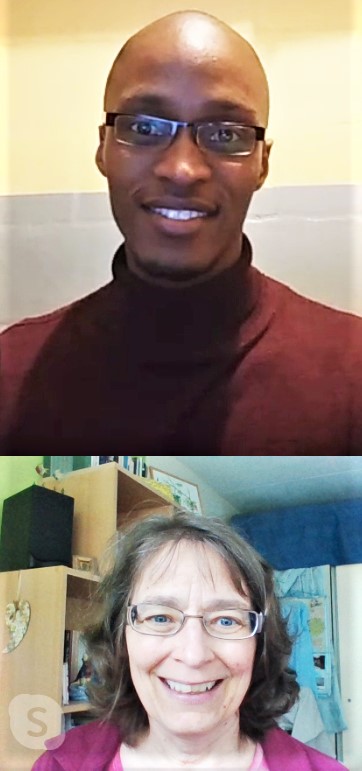
Songezo Nkolombe
and Mary online
We're about to start a new series of posts on oral cultures titled A Tale of Two Towns by Student.Go intern Songezo Nkolombe.

Songezo Nkolombe just completed his first year of seminary (Baylor) online, due to Covid travel restrictions. He lives in Cape Town, South Africa, and serves as children's minister in a Baptist church there. It was a natural fit for him to work with Romany education projects. His first blog post on oral learners and oral culture will appear on the Romany Education Network this week. He's read a lot, he's listened a lot, and now he's turning that into Yearn to Learn: A Tale of Two Towns. 

Songezo brings a wealth of experience to the internship. He has served for a number of years as children's minister in his home church in Capetown, South Africa. He lives in a multi-ethnic city. And although he was definitely raised in a print culture, many extended family members live in an oral culture. 

Songezo has sat in and contributed to on online meetings for Romany education projects in Romania and Moldova. He has read and discussed studies in oral cultures. And now he's started to translate that into story form. What an oral culture way to help print people better understand oral cultures!