Showing posts with label Multi-lingual Education. Show all posts

Tuesday, July 2, 2024

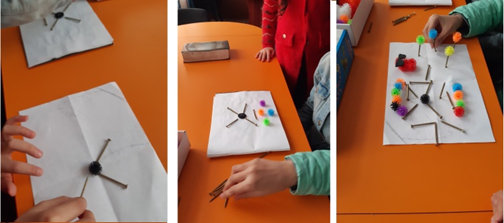
4 WORDS: FLEXIBLE BIBLE LESSONS/EDUCATIONAL LESSONS

People who work with Romany children need to be flexible. Sometimes 30 children come; sometimes only 3.
Sometimes most of them are preschool-age; sometimes half of them are preteens. These suggestions are also flexible.

Four concrete words have been chosen from each Bible story. These words aid in remembering the story.

There are suggested activities to go with each of the 4 words. These Davar: Bridging to Literacy activities also practice school-related skills and help people of any age be more ready to read and write.

Each leader chooses how to tell the Bible story. Perhaps existing Bible lessons are used. Perhaps the leader has to make up their own Bible lessons. Perhaps the leader simply tells the Bible story. Every leader will change and choose from these suggestions for their own club.
Here is one example. Feel free to contact us for more information or more suggestions!

Esau and Jacob are born – Genesis 25:19-28

Nothing  - Rebecca had no baby, nothing happened (prayer)

Twins  -  Rebecca had twins, two babies (answer to prayer)

Different  - the boys were totally different, with different futures.

Tent - Jacob stayed home, in the tents, and helped his mother.

Suggested activities:


Nothing

FUNdament 11 Missing/Gone. Give everyone a folded paper, some have a little sweet in it, others have nothing.


Nothing, a bit, enough, much, too much. Explain the meaning of these words. Have each word written on a separate piece of paper. Put these at one end of the room. Also have smaller pieces of paper for everyone in the group with one of these words written on it. Hand the papers out, so that each person has one.
At a certain signal, everyone runs to the word on the floor that matches the word in their own piece of paper.


Nothing, something. Use words for amounts in both school language and home language. Everyone can increase their vocabulary.

Cook something together. Together, measure the right amount of ingredients. Or together feel/stir/taste and see if there is enough or too much.

Twins

FUNdament 9 Two - activities

Nice name? Parents choose names for their children. Discuss which names the group like. (This gives insight into the way the group thinks, and what they find important.)

Have each person make a paper hat with one of their favorite names written on it. Talk about a letter in that name.

Letter Game B8, variation 4. Everyone with an “A” in their name goes . . . (over by the window or stands by the red chair or . . . ). Everyone with a “J” in their name goes . . . .


Different and the same are words used in education, We need know these two ideas in order to do well in school. We play games to teach or practice both words in the school language and the home language.

Start Game B3 Mosaic, B5 Statues.  Are all the statues (or mosaics) the same?

FUNdament 10 The Same.  Make it fun, choose one person to do everything DIFFERENT while the others do the same

Draw differences. Everyone draws their own human figure. Then they draw another one which if very different than the first drawing.

Do a “see the differences” worksheet (Example with 2 houses, available via link).

Tent

Make a tent out of cloths or blankets. Eat a snack in the tent.

Take turns acting out some task that is done in the house (cooking, washing, etc.) The rest of the group has to guess what is being acted out. 

Connect the dots to draw a tent.


Marleen Schonthaler and Mary van Rheenen


Thursday, February 24, 2022


New preschool for Roma children opened in Leskovac, Serbia

Great news from Serbia! A new preschool for Roma children has recently been opened in the town of Leskovac, amidst great joy of celebration. This preschool is an initiative of the Roma Community Church in Leskovac in partnership with two international organisations.

Teacher and students at the preschool

The preschool consists of two groups of eight students each and will be taught by a teacher and an assistant. The teaching will be done in two languages, Romani and Serbian. At the beginning the teaching will be in Romani while students are introduced to Serbian words. Towards the end of the school year, the teaching will be done mostly in Serbian.

Pastor Misha Bakic, who is part of this initiative, says:

“For years education among the Roma people has been one of the greatest issues among our people. One of the things that is blocking Roma children from being successful in school is the fact that we speak our native language at home, which is Romani. So when the kids are starting to go to school, which uses the Serbian language as the official language, the problem is Roma kids won’t understand the Serbian language and naturally will fall behind in comparison to other kids.

“This is why we had on our hearts for many years to start a preschool education for Roma kids in which there will be a teacher who’s going to teach the kids the Serbian language, Bible lessons, hygiene, culture, good behaviour, and is going to help the kids to be able to follow the lessons and be good students.

“This is going to be a place of blessing, a place of education, and a place of the Bible. Lots of joy, lots of toys, and praises be to the Lord!”

Tuesday, March 9, 2021

Multilingual Students; Multilingual Teacher

What language do your students speak at home? And what language do you use for instruction?

Our friend Zoltan Barabas teaches a Bible club in Transylvania. Instruction in school is in Romanian.

Some households in this Rroma village speak mainly Romani, some Romanian, some Hungarian. All of them use a mixture. 

This situation is very familiar to Zoltan. Though he was born in Romania, his first language is Hungarian. He teaches most of the Bible club in Romanian, but the "central truth" and the memory verse are always given in Romani. (See ashunledevles.eu.org for examples of this dialect in three different orthographies, including Hungarian.) 

This past week, the children played a Davar Start Game called Count At Home. First they played the game in Romanian. When finished they had counting together, they repeated the game with numbers in Romani. 

Zoltan explained, "Some kids are not so fluent in Romani; some are more fluent in Romanian. All instruction at school is in Romanian. That's the reason to explain it first in Romanian. Then we did it in Romani to put it clearly in their head in Romani. Especially for kids who are fluent in Romani. They can think about math and numbers in both languages."

Zoltan added that this reinforces the value of both languages. "I use myself as an example to reinforce that the mother tongue is important. Hungarian is my first language. But I do most of the lesson in Romanian. Sometimes I talk with adults (who happen to be in the house where the children's club meets) in Hungarian because they are more fluent in that language. I reinforce that it is okay to use Romanian and that the mother tongue (Romani) is important." 

"Personal example always best teacher," he concluded.

How would you handle this situation? 

Friday, February 21, 2020

Language and Learning

Today, on International Mother Language Day, I warmly recommend to you a message from the SIL Executive Director, Michel Kenmogne, reflecting on the power and role of local languages.
The words and pictures in the short video below show glimpses of a few places in our world where people have decided to give their children a strong foundation in life by allowing them to receive their first years of schooling in their own language, before continuing to learn in a regional or national language.

It is my hope that many Roma children in Europe and elsewhere, will be able reap the benefits of this kind of opportunity for them also. I am thankful for the hard work of others elsewhere that allow there to be good examples and encouragements in my continued networking and advocating for good quality and relevant education in Roma communities.

Sincerely,
Marianne Fast
Literacy Consultant SIL International


Click to watch the video.

Tuesday, November 27, 2018

'Multilingual education; Creating Equal chances for everyone.'


OSCE: the Organization for Security and Cooperation, appointed a High Commissioner on National Minorities (HCNM) in 1992. OSCE is based in Vienna and includes 57 participating states from Europe, Central Asia and North America.
The first HCNM was Max van der Stoel. Among other things, he focused attention on minority education, in particular minority language education. He stated: "It is clear that education is an extremely important element for the preservation and the deepening of the identity of persons belonging to a national minority." In 'The Hague Recommendations regarding the Education Rights of National Minorities', further details are given about how to implement quality education for minority people. I have copied a few of these recommendations in the attachment.
On the website of the OSCE, an article is featured titled: 'Multilingual education; Creating Equal chances for everyone.'                                  

(Some of) THE HAGUE RECOMMENDATIONS REGARDING THE EDUCATION RIGHTS OF NATIONAL MINORITIES

1) The right of persons belonging to national minorities to maintain their identity can only be fully realised if they acquire a proper knowledge of their mother tongue during the educational process. At the same time, persons belonging to national minorities have a responsibility to integrate into the wider national society through the acquisition of a proper knowledge of the State language.
8) In accordance with international law, persons belonging to national minorities, like others, have the right to establish and manage their own private educational institutions in conformity with domestic law. These institutions may include schools teaching in the minority language.

11) The first years of education are of pivotal importance in a child's development. Educational research suggests that the medium of teaching at pre-school and kindergarten levels should ideally be the child's language. Wherever possible, States should create conditions enabling parents to avail themselves of this option.
12) Research also indicates that in primary school, the curriculum should ideally be taught in the minority language. The minority language should be taught as a subject on a regular basis. The official State language should also be taught as a subject on a regular basis preferably by bilingual teachers who have a good understanding of the children's cultural and linguistic background. Towards the end of this period, a few practical or non-theoretical subjects should be taught through the medium of the State language. Wherever possible, States should create conditions enabling parents to avail themselves of this option.

Source
by Marianne Fast

Saturday, May 13, 2017

Parents and Children Learn Together

Did your mom read to you? Did she show you how to work puzzles? Did she give you crayons and coloring books? Did she play games with you?
Let's back up a step--did she have puzzles to show, crayons to give, or books to read? These moms don't. But they can teach their children all those literacy-related things through a Parent-Child Club. 
 

What is the Parent-Child Club?
Fun activities that help children learn. Young children participate together with an older person from their family. This person could be a mother, grandma, an aunt, a sister or a father, uncle, brother or grandfather.

Why use the child’s first language as much as possible? 
Children learn best in their own language, partly because they feel more at ease when their own language is spoken. Also, it improves a person’s sense of self-worth when their language is considered important enough to be used in activities like this.


These photos are from the first field trial. We would like to do at least two more this coming year. Interested in helping? Or leading one yourself? Let us know! 
Activities: available at Davar Parent-Child Club.


Monday, June 22, 2015

MTB-MLE Education Challenge


Studies around the world, including in Europe, have shown that MTB-MLE education increases school attendance as well as school performance. Parents can relate more to the schooling and participate in it because it begins in a language which they are also competent in. Students feel more valued when the language of instruction, to begin with, is one which they already know. They are able to succeed in the beginning parts of school, which leads to a positive experience in school and reinforces their willingness to attend. Using the children’s language also shows a respect for them and for their culture. It is an attitude towards the children which fosters mutual respect and care. Learning to read is a skill which can be transferred from one language to another. But it can be transferred better if the child has a firm foundation in learning to read. They can get this best in a language which they thoroughly understand. It is not difficult to begin by having teachers use the local language in preschool and other early grades. This might involve hiring teachers’ assistants who are fluent in the local language. But, again, this would probably increase school attendance. Increasing school attendance should increase school performance. It would require a shift in many people’s thinking—in school staff’s attitudes towards Roma and Romani, in the community’s attitude towards the complexity and validity of their own language. But the rewards would be worth it. Shall we try it for 2 years?

Tuesday, January 27, 2015

Do you agree?


Formal schooling often appears particularly foreign and irrelevant to Romany. Empowering the community to participate in education, and building on ways the community already educates such as observation, listening, elderly community members, communicating in one’s first language, will enhance schooling and increase overall educational levels.

Reactions?


Wednesday, January 21, 2015

Multilingual Education

LEAD (Language, Education, and Development) offers an online course about Multilingual Education.


Course Outline

Section 1: The purpose of education
Module 1.1 - Why does education matter?
Module 1.2 - Defining ‘education’
Module 1.3 - How does context influence education?
Section 2:  Being adaptable to changing contexts: sociolinguistic issues and the adaptability of multilingual education
Module 2.1 - How the use of language changes
Module 2.2 - Cultural and ethnic identity in times of rapid change
Module 2.3 - The ‘added value’ of community-based learning
Module 2.4 - Adapting formal education opportunities to fit the needs of your community
Section 3:  The truth about mother tongue-based multilingual education
Module 3.1 - Foundations of MTB-MLE
Module 3.2 - Debates around MTB-MLE
Module 3.3 - Benefits of MTB-MLE
Module 3.4 - How MTB-based learning benefits extend beyond the classroom

For more information, go to:  leadcommunity.ning.


Thursday, May 22, 2014

Boekbespreking van Heritage Language Playschools for Indigenous Minorities.


Praktische Informatie over de mogelijkheid om Roma kinderen onderwijs aan te bieden dat aansluit bij hun leefwereld en kennisniveau, waardoor ze uiteindelijk tot een vruchtbare integratie kunnen komen in de cultuur en het land waarin ze wonen. In de bijlage 'Playschools' staat een boekbespreking van Heritage Language Playschools for Indigenous Minorities (2011). Dit gaat over "Optimale ondersteuning voor peuters en kleuters die minderheidstalen spreken, bij hun voorbereiding op het volgen van regulier onderwijs".

Optimale ondersteuning voor peuters en kleuters die minderheidstalen spreken, bij hun voorbereiding op het volgen van regulier onderwijs, wordt aangeboden in het boek Heritage Language Playschools for Indigenous Minorities (2011).

Het boek is ontstaan in Maleisie, waar UNESCO in een taalgemeenschap een proefproject draaide alvorens ditzelfde soort onderwijs aan te bieden en aan te moedigen in andere taalgemeenschappen. UNESCO werkte hierbij nauw samen met plaatselijke mensen en werd geassisteerd door Karla Smith en anderen met een achtergrond in het opzetten en geven van meertalig onderwijs (MLE, of Multi Lingual Education).
Meertalig onderwijs is gebaseerd op het welbekende principe: uitgaan van het bekende. Dat betekent beginnen met onderwijs aan de allerkleinsten in de taal en cultuur waarin zij zich het meest thuis en vertrouwd voelen, nl. de taal die in hun eigen leefgemeenschap (en die van hun ouders en grootouders) het meest gebruikt wordt. Pas nadat kinderen zich in die vertrouwde omgeving nieuwe vaardigheden hebben eigengemaakt, zoals lezen en schrijven, hebben zij voldoende in huis om met vertrouwen en succes andere talen te leren en in andere talen onderwezen te worden.

Smith besloot om de stappen die gevolgd werden bij het opzetten van het proefproject en in latere nieuwe projecten in Maleisie, nauwkeurig vast te leggen. Dit resulteerde in een uniek en kompleet handboek voor diegenen die peuters en kleuters de best mogelijke ondersteuning willen geven bij hun ontwikkeling; en die, gebaseerd op groeiende onderzoeksresultaten wereldwijd, deze kinderen de beste kansen van slagen willen geven tijdens hun basis-, middelbaar- en vervolgonderwijs. Het uiteindelijke doel is dat deze kinderen volwassenen worden met een duidelijk gevoel van identiteit en 'erbij horen', voortkomend uit de worteling in hun unieke eigen taal en cultuur. Als volwassenen met een solide fundering die in hun kinderjaren gelegd is, hebben deze mensen het zelfvertrouwen en de ruimdenkendheid die nodig zijn om een positieve bijdrage te leveren aan de wereld waarin zij leven; niet alleen binnen hun eigen cultuur, maar ook in het land waar ze wonen, en in de internationale, globale gemeenschap.

Onderzoek
Cummins, 2001, schreef: 'als je de taal van een kind afwijst, voelt het voor dat kind of je hemzelf afwijst'. 'Het is niet genoeg als de leerkracht op een passieve manier accepteert dat een kind een andere taal en cultuur heeft; een leerkracht moet proactief zijn en het initiatief nemen om de linguistieke identiteit van het kind te bevestigen'.
Thomas en Collier (1997) concludeerden uit een 14 jaar durend onderzoek onder duizenden kinderen dat hoe meer kinderen zich cognitief en academisch ontwikkelen in hun eigen taal en op de 'normale' leeftijd hiervoor, hoe beter ze academisch presteerden in de nationale taal (waarin in latere schooljaren geleerd werd) aan het eind van hun schoolloopbaan.
Een ouder van een kind dat haar schoolloopbaan in de eigen taal mocht beginnen (in het dorp Laitrao in Papoea Nieuw Guinea) zei: “Het is belangrijk om onze kinderen te leren lezen en schrijven, maar het is nog belangrijker om hen te leren trots te zijn op wie zij zijn en op ons”.

Achterhaalde inzichten
Veel mensen denken dat een kind zo jong mogelijk moet beginnen met het horen/leren van een taal waarin het onderwijs moet gaan ontvangen, ook al wordt die taal niet of haast niet gebruikt in de leefomgeving van het kind (thuis of in de gemeenschap waar het woont). Daarom zijn veel onderwijssystemen erop gericht om kinderen te onderwijzen in voor hen vreemde talen. Dat betekent dat voor deze kinderen het formele, schoolse, leerproces begint met het moeten leren van nieuwe vaardigheden en concepten die hen aangeleerd worden door het medium van een voor hen onbekende taal. Dit werkt echter averechts op de cognitieve ontwikkeling van het kind. Leermoeilijkheden voor deze kinderen zijn dikwijls een gevolg van deze aanpak wat weer leidt tot zittenblijven of schoolverlating, negatieve zelfbeelden en uitsluiting.
Een meer stimulerende aanpak zou zijn om te zorgen dat een kind zich vloeiend kan uiten bij het ontwikkelen van leer- en leesvaardigheden en niet constant op zijn tenen hoeft te lopen om het bedoelde te kunnen begrijpen.
Meertalig onderwijs helpt kinderen om zich nieuwe kennis en concepten eerst eigen te maken in een taal die ze al kennen en helpt ze daarna bij het leren van een nieuwe taal, waarin die nieuwe kennis opnieuw bevestigd en geconsolideerd wordt. Dit heeft een positief effect op de cognitieve ontwikkeling en het aanleren van nieuwe kennis terwijl het gelijktijdig de kennis van de nieuwe taal verbetert.
Meertalig onderwijs is dus NIET:
- een paar onderwijsmaterialen vertalen in de lokale – of moedertaal van de kinderen,
- de moedertaal gebruiken op school tijdens een aantal uren per week.
Maar het is WEL:
Kinderen helpen om geschikte manieren van denken en redeneren te leren, vaardigheden die ze in verschillende talen zullen kunnen gebruiken. Het begint met wat voor de kinderen bekend en vertrouwd is, en introduceert op een geleidelijke manier andere talen en culturen (regionaal, nationaal en internationaal), waarbij dus de unieke eigen linguistieke en culturele erfenis niet vergeten of opgeofferd hoeft te worden.

Internationale opinie over MLE
Naast de groeiende ondersteuning van de principes van MLE door voortgaand onderzoek en ervaring in vele delen van de wereld, wordt er in toenemende mate ondersteuning geboden in de vorm van promotie door internationale organisaties. De Verenigde Naties en met name UNESCO staan volledig achter de uitgangspunten en doelstellingen van meertalig onderwijs. Zoals bijv. in 2008 verwoord werd door het secretariaat van het UN Forum on Minority Issues:
' Schooltaal protocol voor beginnend onderwijs in nationale scholen houdt idealiter in dat de taal van het kind gebruikt wordt als de belangrijkste onderwijstaal, waarbij geleidelijk aan de nationale, of andere dominante, taal wordt aangeleerd, als die anders is dan de taal van het kind....' (punt 51)

De Europese Unie heeft richtlijnen en hulpmiddelen ontwikkeld om Roma te integreren als volwaardige Europese burgers, o.a. d.m.v. onderwijs. In hun artikelen over dit onderwerp wordt gezegd: “The key to a better future for Roma lies in the education of Roma children”. Door het stimuleren van erkenning en het gebruik van minderheidstalen als onderwijstalen, probeert de EU onderwijs voor Roma kinderen (en andere minderheden binnen de EU) makkelijker toegankelijk te maken. Echter bij de implementatie van deze richtlijnen in de verschillende lidstaten is er nog heel wat te doen.

Inhoud van Heritage Language Playschools for Indigenous Minorities (HeLPIM):
Het boek bevat twee aparte delen. Het eerste deel bevat een overzicht van wat MLE inhoudt en de principes waarop het gebaseerd is, evenals details van wat er organisatorisch en administratief komt kijken bij het organiseren en implementeren van dit soort onderwijs.
Deel twee is bestemd voor onderwijspersoneel en bevat naast een aantal praktische richtlijnen voor het organiseren van de lesstof, uitgewerkte lesplannen voor 40 weken onderwijs. De lessen zijn geordend rond thema's, waarin gevarieerd en veranderd kan worden. Verder zijn er voorbeelden van spelletjes en activiteiten om het lesaanbod verder uit te breiden en om in te spelen op lokale situaties. Ook zijn er evaluatieformulieren om de voortgang in de ontwikkeling van ieder kind bij te houden, evenals evaluatieformulieren voor de leerkracht om zijn/haar eigen vaardigheden te kunnen verbeteren waar nodig.

Het boek is te zien en te downloaden via de website van het MLE Network:
Marianne Fast, mei 2014